Switchboard Upgrades: When Older Homes Need a Safety Overhaul
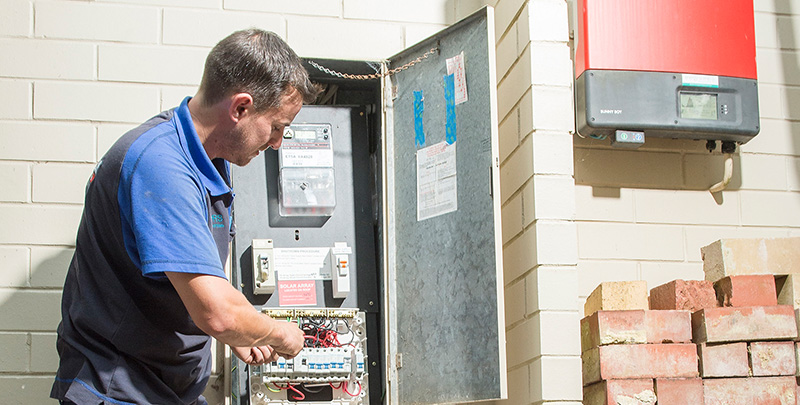
Buying a character home in Unley or Norwood is exciting, right up until the building inspection comes back. Between the leadlight windows and the ornate ceilings, there’s often a small grey box on the side wall. Nobody thinks to ask about it. It’s the switchboard, and in a lot of Adelaide’s older suburbs it hasn’t been touched since the house was first wired up decades ago.
Then the renovation quotes start coming in. Adding a new kitchen circuit, plugging in an EV charger, or getting solar installed. It all comes back to the same question from the electrician. Can the existing switchboard actually handle it, and is it even legal to add to?
How to Tell If Your Switchboard Is Behind the Times
Most homeowners never look inside their switchboard until something forces the issue. A few signs are worth checking for yourself before that happens.
If you open the board and see round, porcelain fuses instead of rectangular switches, that’s a ceramic fuse system. These were standard until the 1980s. They don’t offer the protection modern circuits need. You should also look for a small button marked “T” or “Test” on one of the switches. No test button anywhere on the board means no safety switch. That’s a genuine gap, not a minor inconvenience.
Other warning signs build up over time. Lights that flicker when the kettle or air conditioner kicks in. Breakers that trip for no obvious reason. A faint burning smell near the board. These are things we get called out for regularly across Adelaide’s older housing stock. Homes in the inner suburbs built before the 1970s are the most common culprits. The switchboard was simply sized for a much smaller electrical load than a modern household uses.
What "Compliant" Actually Means in South Australia
A lot of homeowners assume compliance is about age. It isn’t, not directly. What matters is whether the board meets current wiring rules under AS/NZS 3000. It also needs the safety switches South Australian law now requires.
Under South Australian regulations, a safety switch must be fitted whenever a circuit is added or altered. That applies to existing homes, not just new builds. Get a new powerpoint installed, extend a lighting circuit, or add a dedicated line for a spa or oven, and the law expects that circuit to be protected. Sometimes the existing board can’t take an additional safety switch because it’s full or too old for modern components. When that happens, the upgrade becomes part of the job whether you planned for it or not.
This is often where quotes get more expensive than homeowners expect. It isn’t the electrician padding the bill. It’s the switchboard failing to meet a standard that any new work has to comply with.
Why Renovations and New Additions Force the Issue

Renovation projects are the single biggest trigger we see for switchboard upgrades in Adelaide. A kitchen renovation alone can add several new circuits, for an induction cooktop, a dishwasher, extra powerpoints. Add a smart home upgrade with networked lighting and security, and an older board runs out of room fast.
Solar and EV charging push the issue further still. A rooftop solar system needs its own dedicated circuit and isolator. An EV charger installation typically draws far more continuous current than anything else in the house. On a board that’s already at capacity, there’s often nowhere left to safely add either one. We see this constantly in the newer estates around Mawson Lakes too. Growing households are adding a second EV or a bigger battery system than the original build ever accounted for.
Need a hand working out which setup suits your home before you commit to a renovation? Book a licensed Sharpe technician for an on site switchboard assessment before your other trades start work, not after.
Insurance, Compliance Certificates and Selling Your Home
This is the part that catches people out. Any electrical work in Australia has to be carried out by a licensed electrician. Once it’s finished, it has to be signed off with a compliance certificate. Unlicensed or DIY switchboard work isn’t just illegal. It can also complicate an insurance claim later, if a fire or fault is ever traced back to it.
Selling or renting out an older property brings the same issue into focus. A non-compliant switchboard is increasingly something buyers, tenants and property managers ask about directly. Interstate rental standards have already moved toward requiring modern switchboards with safety switches as a baseline. South Australian expectations are heading the same way. A proper electrical maintenance check now is far cheaper than an urgent fix once a sale is already underway.
We also get a steady stream of electrical breakdown callouts. Often the underlying cause is a switchboard that’s been quietly failing for years. Catching it early is always the cheaper option.
Comparing a Simple Upgrade to a Full Replacement
Not every older switchboard needs a complete rebuild. What’s involved usually falls into one of two categories.
- A targeted upgrade adds modern circuit breakers and safety switch installation to an existing board with room and sound wiring behind it. This is often enough for a home that just needs a couple of new circuits.
- A full switchboard replacement is needed when the board is out of space or still uses ceramic fuses throughout. This usually comes bundled with broader house rewiring if the cabling itself is original to the house.
Cost varies a lot depending on scope. A straightforward replacement on an Adelaide home commonly falls somewhere in the low thousands. It can run higher if new mains, extra sub-boards, or asbestos removal are involved. A well installed modern switchboard should comfortably last another 25 to 30 years. Some of the original ceramic fuse boards out there have already clocked up 40 or 50.
Does Your Home Actually Need One Right Now?
Built before the 1980s and no electrical work done in the last decade? It’s worth getting looked at, even without an obvious fault. The same goes if you’re planning a renovation, adding solar or an EV charger, or preparing to sell.
Guessing at this one rarely ends well. A board that looks fine from the outside can still be missing safety switches. It might be running on wiring that’s past its use by date underneath. A licensed electrician working across Adelaide can tell you in one visit which one you need.
Get It Sorted Properly
An older switchboard isn’t something to leave until it fails. There are renovation triggers, insurance implications, and safety switch rules that already apply the moment you touch a circuit. Most Adelaide homeowners are better off getting ahead of it.
Sharpe Trade Services has been handling switchboard upgrades and rewiring across Adelaide homes for over 45 years. Our licensed electricians can also sort the plumbing, solar or air conditioning side of a job. That means fewer contractors to juggle. Call us on 8262 5000 or use Easy Book to get a licensed technician out to assess your switchboard.
Frequently Asked Questions
Open the switchboard cover and look for round porcelain fuses. These point to an older ceramic fuse system rather than modern circuit breakers. A safety switch has a small “T” or “Test” button on one of the switches, and no test button means no protection.
There’s no blanket law forcing every homeowner to upgrade an old switchboard on a set timeline. However, South Australian rules require a safety switch whenever a circuit is added or altered. In practice, most renovations, new appliance circuits or solar installs end up triggering it.
Costs vary depending on whether it’s a targeted upgrade or a full replacement. Full replacements involving new mains or asbestos removal cost more. A couple of quotes from licensed local electricians is the best way to know what your board actually needs.
It depends on how much spare capacity your existing board has. Many older boards are already full or too outdated to safely add a dedicated circuit. Some also need an electrical meter upgrade to handle solar export. That often makes the upgrade part of the installation cost, not an optional extra.
Unlicensed or non-compliant electrical work can complicate an insurance claim if a fault or fire is later traced back to it. Getting switchboard work done by a licensed electrician, and keeping the compliance certificate, is the simplest way to avoid that risk.


